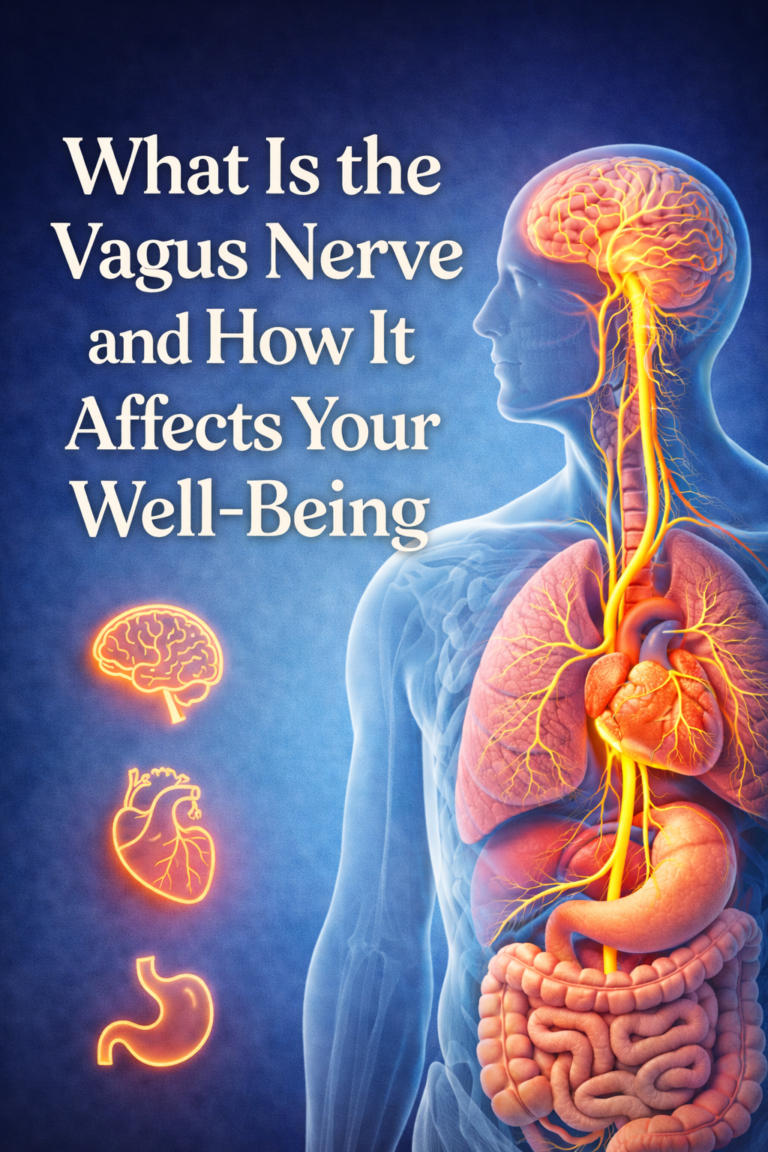
The vagus nerve is everywhere in the wellness world right now. You’ve likely heard it’s connected to stress and cortisol.
But what does that actually mean? And how do you know if it’s affecting you? Let’s break it down in a simple, practical way.
What exactly vagus nerve is?
The vagus nerve is the longest and one of the most important nerves in your body. It starts in your brainstem and travels down through your neck, chest, and abdomen, connecting your brain to major organs like your heart, lungs, and digestive system.
You can think of it as a communication pathway between your brain and body. It constantly sends and receives signals that help regulate essential functions like heart rate, digestion, breathing, and blood pressure.
The vagus nerve is also a key part of your parasympathetic nervous system—often called your body’s “rest and reset” mode. This is what helps you relax, recover from stress, and feel calm and safe.
Because the vagus nerve connects so many systems in the body, it influences both your physical and emotional health.
When it’s functioning well, you may notice:
A steady heart rate
Smooth digestion
Easier breathing
A sense of calm and emotional balance
Feeling more connected and present
It also helps your body recover after stress. So instead of staying stuck in “fight or flight,” your system can return to a relaxed, grounded state.
What Happens When the Vagus Nerve Is Dysregulated
When your nervous system is overwhelmed—especially by chronic stress or past trauma—the vagus nerve can become dysregulated.
This doesn’t mean it’s damaged. It just means your body is having a harder time finding balance.
Common signs of vagus nerve dysregulation:
Physical symptoms:
Digestive discomfort
Shallow or irregular breathing
Fatigue
Muscle tension
Changes in
heart rate
Emotional symptoms:
Anxiety or irritability
Feeling overwhelmed
Emotional numbness
Difficulty understanding your feelings
Social symptoms:
Feeling disconnected from others
Withdrawing from relationships
Sensitivity to tone of voice or body language
You might also notice going into a “freeze” state—feeling shut down, stuck, or unable to respond. This is your body trying to protect you.
Why This Happens
Your nervous system is designed to keep you safe.
But when it experiences ongoing stress or trauma, it can stay on high alert—even when there’s no real danger. The vagus nerve then sends signals that keep your body in survival mode instead of relaxation.
This is why small triggers (like a conversation or stressful thought) can feel much bigger than they are.
How to Support and Regulate Your Vagus Nerve
The good news is that your nervous system is adaptable. You can gently train it to feel safe again.
Simple, consistent practices can help regulate the vagus nerve and bring your body back into balance.
1. Slow, deep breathing
Breathing slowly (especially longer exhales) helps calm your heart rate and signal safety to your body.
2. Gentle movement
Walking, stretching, or somatic movements can release tension and support nervous system regulation.
3. Cold exposure
Splashing cold water on your face or ending a shower with cold water can stimulate the vagus nerve.
4. Humming or singing
These activate the vagus nerve through vibration and can naturally calm the body.
5. Safe social connection
Spending time with people you feel comfortable with helps shift your body into a “safe and connected” state.
6. Targeted vagus nerve stimulation
There are also tools designed to gently stimulate the vagus nerve directly. Devices like Pulsettouse mild electrical stimulation on the neck area to help activate the relaxation response.