There are days when everything feels like too much.
Too loud.
Too fast.
Too many tabs open — on the screen and in your head.
You’re answering texts while making dinner, trying to breathe through a wave of anxiety that came out of nowhere, wondering why your heart is racing when nothing seems wrong.
This article isn’t here to FIX you.
Because, really, there is nothing to fix 🤷♀️.
Instead, it’s here to help you simply come back to yourself.
Just a little aid for the moments when you feel unmoored.
When your chest is tight, your thoughts won’t stop, or you’re not even sure what you’re feeling.
Grounding exercises are simple tools you can use when you feel emotionally flooded, anxious, or disconnected from your body.
They’re used in therapy, somatic healing, and even spiritual practices as a gentle alternative to avoiding or numbing your feelings.
Grounding exercises are an anchor to help you stay in the safety of THE PRESENT MOMENT.
You don’t need special equipment or hours of free time. Just a few minutes, your senses, and the willingness to gently say: I’m here now.
Let’s walk through 7 grounding exercises that are especially helpful for women who feel overwhelmed — the kind you can actually remember and use in real life.
So, let’s begin. 🌿
Why grounding matters?
I remember one afternoon when I stood in my kitchen staring at the sink, completely frozen. The water was running, the kettle was whistling, a notification buzzed on my phone — and for some reason, I couldn’t move. It was like my body had checked out, and all that was left was the noise.
That moment wasn’t a crisis. It wasn’t even dramatic. But it was the kind of quiet overwhelm that builds up until you feel like you might float away from your own life.
That’s what grounding is for.
Grounding brings you back to your body when your thoughts have taken off.
It reconnects you to here and now when your nervous system is stuck in fight, flight, or freeze.
And it doesn’t require deep breathing on a mountaintop. It can start with noticing the feeling of your feet on the floor.
Grounding is often used in therapy to help regulate panic attacks, trauma responses, and dissociation.
And in spiritual practices, grounding is the way we anchor our energy before we reach for anything higher.
But there shouldn’t be any crisis or spiritual milestone to turn to grounding.
Daily grounding is for the woman who keeps POWERING THROUGH until her body says “stop.”
It’s for the one who can’t sleep because her mind is rehearsing conversations from ten years ago.
It’s for the one who smiles through everything but feels like she’s disappearing on the inside.
If that’s you, you’re not alone, and you’re NOT broken.
Let’s explore some gentle ways to return to solid ground.
1. The 5-4-3-2-1 Senses Exercise
This is one of the most popular grounding techniques, not because it’s trendy, but because it works.
It’s simple, quick, and you can do it anywhere, whether you’re in a meeting, in bed, or sitting in your car trying not to cry.
The idea is to slowly walk yourself through your five senses, bringing your awareness back to your body and your environment.
When your mind is spiraling, this exercise gently anchors you to right now.
THE 5-4-3-2-1 SENSES
Take a slow breath. Then name:
5 things you can see Look around you. Notice the texture of the wall, the shape of a shadow, the color of your socks. Be specific.
4 things you can touch Feel your clothing on your skin. The weight of your body in the chair. The coolness of a glass. Anything you can physically sense.
3 things you can hear Listen for obvious sounds — then quieter ones. A distant hum. A bird outside. The sound of your breath.
2 things you can smell If you can’t smell anything in the moment, think of two smells you love or go find one (like hand lotion or tea).
1 thing you can taste It could be gum, coffee, your toothpaste, or simply noticing the absence of taste.
You can go fast or slow. Whisper it to yourself or think it quietly in your head. The point is not to do it perfectly — it’s to bring your attention out of panic and back into the room.
💡 Why It Works
When you’re anxious or dissociating, your brain is either racing ahead (fight or flight) or shutting down (freeze). The 5-4-3-2-1 method activates the prefrontal cortex, the part of the brain responsible for rational thinking, by engaging your senses and pulling you out of the overwhelm spiral.
You don’t have to “feel better” immediately. Sometimes just coming back into your body is the victory.
When your anxiety lives in your body, THINKING your way out is NOT an option. That’s where tapping comes in.
Also known as EFT (Emotional Freedom Technique), tapping is a simple somatic practice where you gently tap on specific acupressure points on your body, usually while focusing on a stressful thought or emotion.
It’s like acupuncture without the needles, and you can do it anytime, anywhere.
The Body Keeps The Score by B. Kolk
This book is a goldmine for trauma healing. It shows how trauma lives in the body, not just the mind, and explores how practices like yoga, mindfulness, and somatic therapy can support true recovery. A must-read for anyone on a healing path.
You don’t need to memorize anything complicated. Just follow these basic steps:
Start by naming how you feel. Something like: “Even though I feel anxious and overwhelmed, I’m safe in this moment.”
Begin tapping lightly on the following points:
The side of your hand (the “karate chop” point)
The top of your head
Eyebrow (inner edge)
Side of the eye
Under the eye
Under the nose
Chin
Collarbone
Under the arm (bra line)
Repeat your phrase or simply focus on your breath You can say: “I feel overwhelmed, but I’m coming back to myself.”
You don’t need to get it perfect. The act of tapping while acknowledging your feelings can help shift you out of panic and into presence.
💡Why It Works
Tapping is often used in trauma-informed therapy to help regulate the nervous system. It combines touch, attention, and acceptance — calming the amygdala (your brain’s alarm system) while helping you move through big feelings without suppressing them.
It’s especially helpful when your body is flooded but your thoughts feel disconnected.
📺 Want to See It in Action?
If the description of this practice sounds confusing, watch this short video guiding you through this technique step by step.
3. Nature Grounding
Sometimes the fastest way to calm your nervous system isn’t deep breathing or a mindfulness app. It’s stepping OUTSIDE.
Nature grounding is exactly what it sounds like: using the natural world to help bring your mind and body back into balance.
And no, you don’t need a forest. You don’t even need a backyard.
Just a small patch of earth, a breeze, or a moment of sunlight can be enough.
NATURE GROUNDING
Touch something alive. A tree trunk, the leaves of a plant, a handful of soil. Feel the texture, temperature, and weight.
Take your shoes off. Stand barefoot on grass, sand, or dirt if you can. Wiggle your toes and imagine yourself connecting downward.
Watch the sky. Even through a window. Let your eyes relax as you watch clouds, birds, or the light change.
Listen to natural sounds. Water, wind, birdsong — even a recording works. Let your ears be filled with something older than your to-do list.
Pick up a grounding object. A small stone, a pinecone, a feather. Keep it with you as a physical reminder: I am part of something larger and steadier than this moment.
Earthing Grounding Mat
If you live in a city or can’t get outside often, a grounding (earthing) mat lets you connect to the earth’s energy while you work, rest, or meditate — even indoors.
Nature doesn’t rush. It doesn’t hustle. It just is. Yet everything is accomplished. And when you connect with it, even in tiny doses, your body remembers its wisdom, too.
Sometimes the hardest part of being overwhelmed isn’t what’s happening around you. It’s what’s happening inside.
Racing thoughts.
Shaky images.
That odd floating feeling like you’re not quite real.
When your mind is hijacked by stress, body anchoring can gently guide you back.
Anchoring is just what it sounds like: creating a steady point inside yourself that helps you ride out emotional waves without getting swept away.
BODY ANCHORING EXERCISE
Place one hand on your chest, and one on your belly. Feel the warmth of your own touch. This simple contact tells your body, “I’m here. You’re safe.”
Take a slow breath and gently press your feet into the floor. Don’t force it — just notice the contact and your weight settling downward.
Notice three things happening inside your body right now.
The beat of your heart
The rhythm of your breath
The temperature of your skin
Repeat a soft phrase, like: “I’m allowed to be here.” “My body is a safe place.” “This feeling will pass.”
You’re not trying to change anything — just making space for what’s already here, with kindness.
💡 Why It Works
When you’re overwhelmed, your nervous system might default to old survival modes — fight, flight, freeze, or fawn. Body anchoring uses gentle body awareness to interrupt those patterns and restore a sense of felt safety.
Therapists often use this in trauma recovery to help clients stay connected to their bodies without re-triggering old wounds. But you can use it anytime: before a difficult conversation, after a panic wave, or during a moment of disconnection.
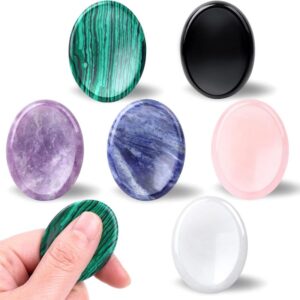
Object-based grounding is about using a physical item, a small stone, a piece of jewelry, a charm, or even a soft piece of fabric, as a tangible anchor.
Something you can touch when you feel overwhelmed, anxious, or spaced out. Something that reminds you: I’m here. I’m okay.
How to Use a Grounding Object:
Keep it close. In your pocket, purse, bedside table, or glovebox — somewhere accessible.
Hold it when you feel unsteady. Run your fingers over the texture. Notice its weight. Breathe as you focus on how it feels in your hand.
Let it hold meaning. It could symbolize safety, love, a memory, or a mantra. Over time, your body will associate it with calm.
Use it during therapy, journaling, or meditation. This is especially helpful for trauma survivors or anyone who dissociates during intense emotional work.
What Makes a Good Grounding Object?
There’s no “right” item, only what works for you. Some favorites include:
A beaded bracelet or ring you can roll or fidget with
A small piece of fabric, velvet, or leather
A symbolic charm or pendant that makes you feel safe or seen
💡Why It Works
Touch is one of the most primal ways we self-soothe. Having a grounding object gives your nervous system a sensory cue — a nonverbal reminder that you’re not floating, you’re tethered. It’s also a subtle and socially acceptable way to ground in public (nobody has to know your ring is a safety tool).
Over time, these items become conditioned anchors, meaning your body begins to associate the object with a return to calm.
When your nervous system is in full-blown alarm mode — heart racing, thoughts racing, tears welling — your body might need a hard reset before anything else can work.
That’s where cold water comes in.
Splashing your face with cold water or holding something icy might sound simple, but it’s actually a proven way to interrupt panic, bring you back to the present, and signal your brain that you’re safe.
How to Do It:
Splash cold water on your face, especially your cheeks and under your eyes.
Hold a cold pack, frozen veggies, or a chilled water bottle to the back of your neck or wrists.
Fill a bowl with cold water and dip your face in for a few seconds (only if you feel safe doing so).
💡Why It Works
Cold water activates the diving reflex — a natural response that slows your heart rate, increases parasympathetic (rest-and-digest) activity, and helps bring you out of emotional overload.
It sends a clear message to your body: You’re safe now. We’re not in danger anymore.
It’s also one of the quickest tools available if you’re on the verge of a panic attack and don’t have time for journaling or breathwork.
7. Gentle Somatic Movement
When your thoughts feel tangled and you feel overwhelmed, sometimes the most powerful thing you can do is move: slowly, intentionally, without trying to fix anything.
Somatic movement is about tuning into your body’s sensations rather than pushing through them.
It’s soft, internal, and deeply grounding — perfect for moments when you feel disconnected, frozen, or overstimulated.
3-MINUTE GROUNDING SEQUENCE
You can do this seated or standing — wherever you are.
Roll your shoulders, one at a time, in slow circles. Notice the stretch and the warmth.
Gently sway side to side. Let your arms be heavy. Imagine your body as seaweed moving in water.
Lift your arms with an inhale, lower them with an exhale. Do this 3–5 times. Match breath to movement.
Stamp your feet or shift your weight from heel to toe. Feel the floor supporting you.
Place one hand on your chest, one on your belly. Take a slow breath and whisper: I am here.
💡Why It Works
Trauma and anxiety often disconnect us from our bodies. Light, intentional movement reintroduces safety through physical sensation. It gives your nervous system a new rhythm — calm, connected, human.
Even a few moments of movement can break the freeze response and help emotions move through rather than stay stuck.
🔗 Want More Somatic Tools?
If you found this helpful, you’ll love these other somatic-based grounding articles:
These small upgrades can make your grounding practice even more effective, especially during moments of panic, overwhelm, or emotional overload. Each item is beginner-friendly, therapist-approved, and easy to keep on hand.
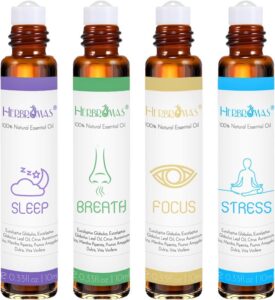
Essential Oil Rollerballs (Lavender, Peppermint, or Citrus)
Stimulate your senses and anchor your awareness. Keep one in your bag for on-the-go grounding. 🛒 Shop essential oils set
Himalayan Salt Lamp
Soft, warm light that mimics the calming frequency of nature. Creates a peaceful, grounded space — especially helpful during winter or late-night anxiety. 🛒 Shop Himalayan salt lamp