

Many people who have lived through trauma carry a quiet confusion with them long after the event has passed. They wonder why their body still reacts, why certain memories feel fragmented, or why they respond in ways that don’t seem logical. Often, this confusion turns inward and becomes self-blame.
To understand trauma, we have to move away from the idea that it is only something that happens in the mind. Trauma is a whole-body experience. It is registered in the nervous system, encoded in brain circuitry, and reinforced by powerful biological processes designed to keep us alive.
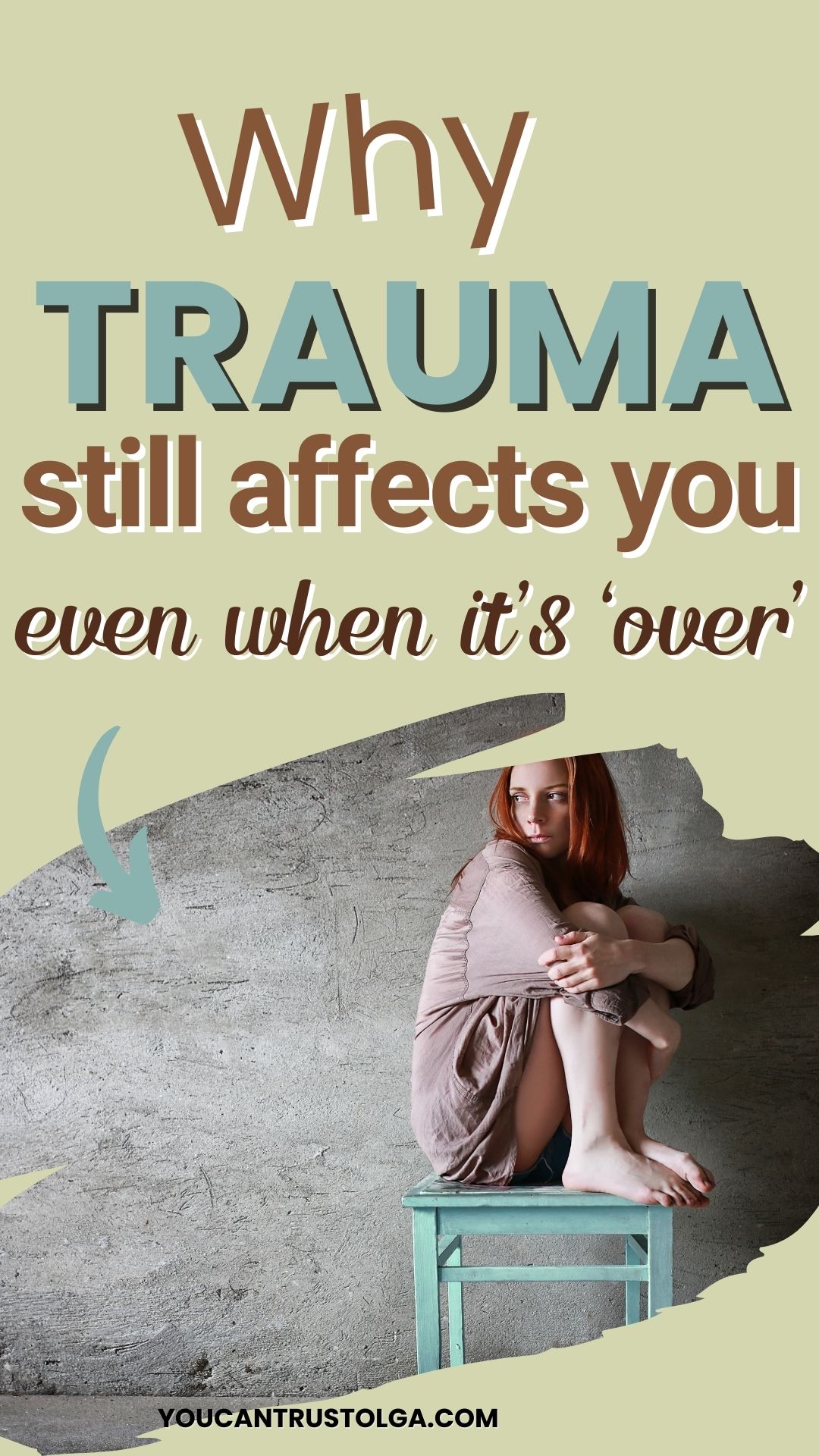
Trauma as a Survival Event, Not a Story
Trauma occurs when a person experiences an actual or perceived threat or loss that OVERWHELMS their capacity to cope.
Trauma could happen from a single event, such as an accident or assault, or it could develop over time through repeated exposure to danger, neglect, or instability.
What defines trauma is not the objective event (it can be perceived too), but the internal experience of FEAR, HELPLESSNESS, POWERLESSNESS, OR HORROR.
In those moments, the brain does not focus on meaning or memory. It focuses on survival. The body mobilizes instantly, often within seconds, before conscious thought has a chance to intervene. This is why trauma can register so quickly and why people often say, “I didn’t have time to think – I just reacted.”
When the Survival Brain Takes Over
Our brain is wired to protect us. When danger is detected, the amygdala (your internal fire alarm) activates and sends urgent signals throughout the body. The nervous system is activated and switches to sympathetic mode. Stress hormones like adrenaline and cortisol are released, heart rate increases, muscles tense, and attention narrows.
This state is meant to be temporary, allowing us to fight, flee, freeze, appease, or collapse – whatever gives us the best chance of surviving the moment.
Now, when an experience is overwhelming, or when threat is repeated, this alarm system can become stuck in the “on” position. The body continues to respond as if danger is still present, even when it is not. At the same time, the parts of the brain responsible for reasoning, reflection, and emotional regulation become less accessible.
This is why, during and after trauma, people often struggle to think clearly, explain their reactions, or calm themselves down.
THIS IS NOT A PERSONAL FAILURE.
It is the nervous system doing exactly what it was designed to do – TO MAKE SURE YOU SURVIVE.
Why Trauma Memories Feel Different
The entire disarray caused by the overstimulated amygdala affects areas of the brain responsible for storing memories.
In everyday experiences, the brain organizes memories into a coherent timeline: what happened, when it happened, and that it is over. During trauma, that system breaks down. The brain prioritizes sensation and emotion over narrative.
As a result, traumatic memories may be fragmented, incomplete, or stored as flashes of images, sounds, or body sensations rather than as a clear story. You might even have trouble accessing the memories of the traumatic experience altogether.
Often because the brain struggles to place the event firmly in the past, the body may respond to reminders as if the trauma is happening again in the present.
This is why flashbacks feel so real. The body does not recognize them as memories and experiences them as current threats.
The Nervous System in a State of Chronic Emergency
Our body always works for homeostasis, which is a fancy word for BALANCE. Our Nervous System regulating this balance by avoiding any override between Sympathetic (activation) and Parasympathetic (rest) modes.
Trauma reshapes the nervous system. When the body stays in survival mode for too long, the balance between activation and rest is disrupted. Stress hormones like cortisol, which are helpful in short bursts, remain elevated. Over time, this affects sleep, digestion, immune functioning, concentration, and emotional stability.
The Body Keeps The Score by B. Kolk
This book is a goldmine for trauma healing. It shows how trauma lives in the body, not just the mind, and explores how practices like yoga, mindfulness, and somatic therapy can support true recovery. A must-read for anyone on a healing path.
The body becomes organized around threat rather than safety. Small stressors can provoke intense reactions, while genuine calm may feel unfamiliar or even unsafe. Many people describe feeling constantly on edge, emotionally numb, or exhausted without knowing why.
Again, these are not signs of weakness. They are signs of a nervous system that learned VERY EFFICIENTLY that the world was not safe.
Trauma Responses Are Not Choices
When people look back on traumatic situations, they often judge their responses harshly:
Why didn’t I fight back?
Why did I freeze?
Why did I comply?
But trauma responses are automatic, not deliberate. Fight, flight, freeze, fawn, and collapse are hardwired SURVIVAL RESPONSES.
In moments of real or perceived danger, the part of the brain responsible for logic, reasoning, and decision-making goes offline. There is no space to pause, think, or choose. The alarm system of the brain reacts instantly, and the body moves straight into action. That gap between stimulus and response – where conscious choice normally lives – disappears.
And that’s by design. From a survival perspective, those seconds spent thinking could mean the difference between life and death. So the body doesn’t ask what you want to do – it does what it believes will keep you alive.
THAT’S WHY THESE REACTIONS ARE NOT CHOICES.
You didn’t decide to freeze, comply, or shut down. Your body responded for you.
What important is that these survival responses can continue long after the danger has passed(!), showing up in relationships, work, or everyday stress. And this part you CAN change.
Understanding that those reactions (or what we like to call patterns) are adaptations for survival, and not personality flaws or failures, that’s where your healing begins.
The Body’s Chemistry of Survival
Trauma is also chemical. In the middle of a traumatic experience, the body releases natural pain-relieving and bonding chemicals, like endorphins and oxytocin.
Their job is to help us survive the moment. They can make us feel numb, detached, or unreal while something overwhelming is happening.
But when the danger passes and those chemicals wear off, the full emotional impact can hit all at once. Fear, grief, or panic may suddenly feel intense, which often leads people to question themselves: Why didn’t I feel this earlier? Why do I feel worse now?
Nothing is wrong: the body just protects first and processes later.
When another person is involved in the trauma, those same bonding chemicals can create confusing emotional attachments. The body may link fear with connection, making it hard to separate safety from harm.
This is how TRAUMA BONDING can form, which is not a choice, but a survival response rooted in the body.
Healing and Integration
The good news is that the brain and nervous system are NOT permanently damaged by trauma. They are adaptable.
Through safe relationships, effective trauma-focused approaches, and experiences that restore a sense of control and safety, the body can learn that the threat is over. Traumatic memories can be processed and integrated so they no longer trigger survival responses.
Healing does not mean erasing the past. It means helping the body recognize that the past is no longer affecting you.
When people understand trauma as a biological survival response rather than a personal failure, shame begins to loosen its grip. And that understanding becomes the foundation for real, lasting healing.